
Homemade Chicken Stock

You really should be making your own chicken stock.  It’s one of the easiest things in the world to do and it is 1,000,000,000,000 times better than anything you can buy at the store.

This is what I did on Saturday and Sunday.

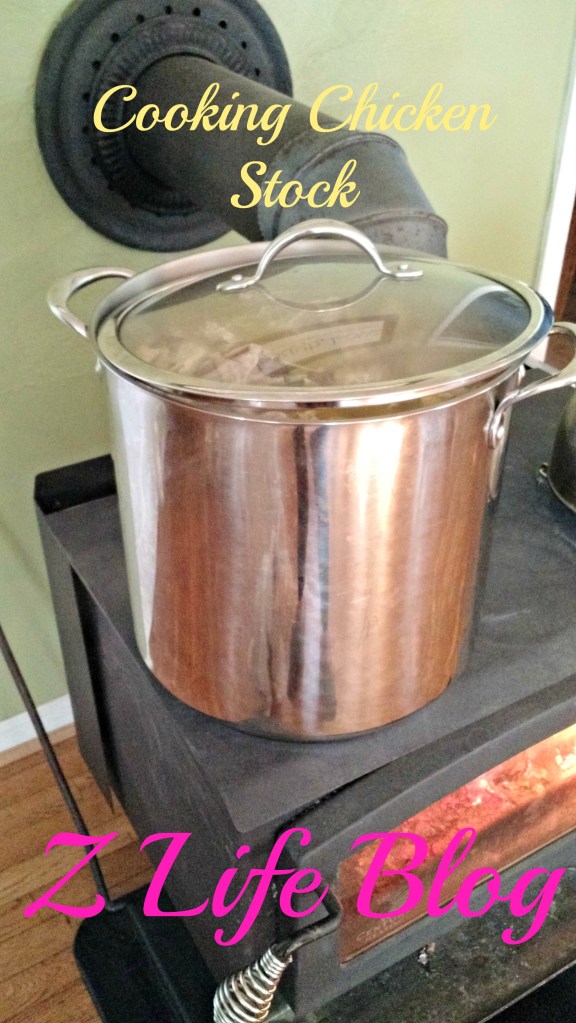
I started with chicken bones I had been saving in my freezer along with some onion, celery and carrot scraps then I let this pot low simmer on the stove for 29 hours.  I added extra water to in once.
chicken-stock-5

This is why I love to make my bone broths in the cooler months, because I can cook it on my wood stove and not have my kitchen stove on for 24 hours.

While my stock was cooking away, I got busy using my electric pressure cooker doing 1 whole chicken at a time from the freezer.  I cooked the 3 laying hens that the Z Man and I harvested from our flock earlier this summer and I cooked 3 of my Polyface Farm roaster chickens.  I pressure cooked them for 20 minutes each then let them cool and picked the meat from them and put the bones in the stock pot.

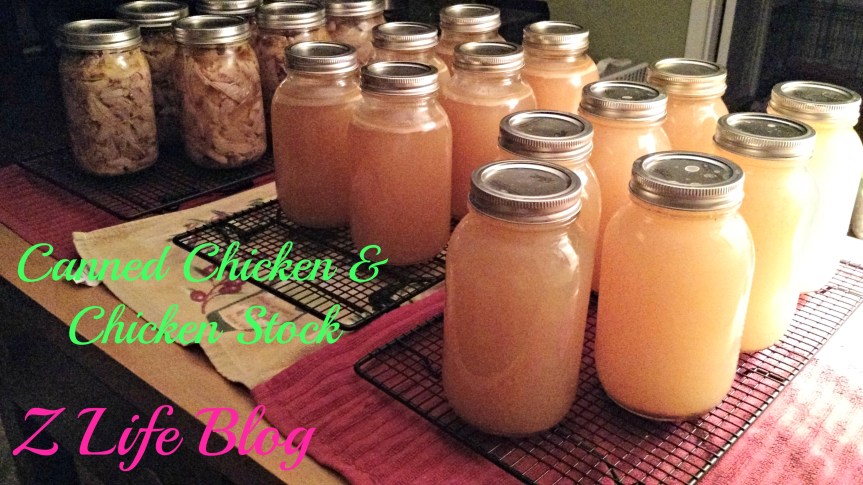
After all the chickens were cooked and the meat was in the jars, I  filled the jars with chicken stock from my stock pot.  Then 7 quarts of chicken meat went into my pressure canner at 10 lbs of pressure for 90 minutes.  The chicken stock, 25 minutes and 10lbs of pressure for quart jars.

In total I ended up with 7 quarts of canned chicken and 18 quarts of chicken stock.

The canned chicken will be great in chicken and dumplings, chicken pot pie, chicken soups, buffalo chicken dip….  A great easy quick meal no matter what recipe I use.

This is good for you food at it’s best.  There are many healing properties in homemade bone broth.
chicken-stock-3

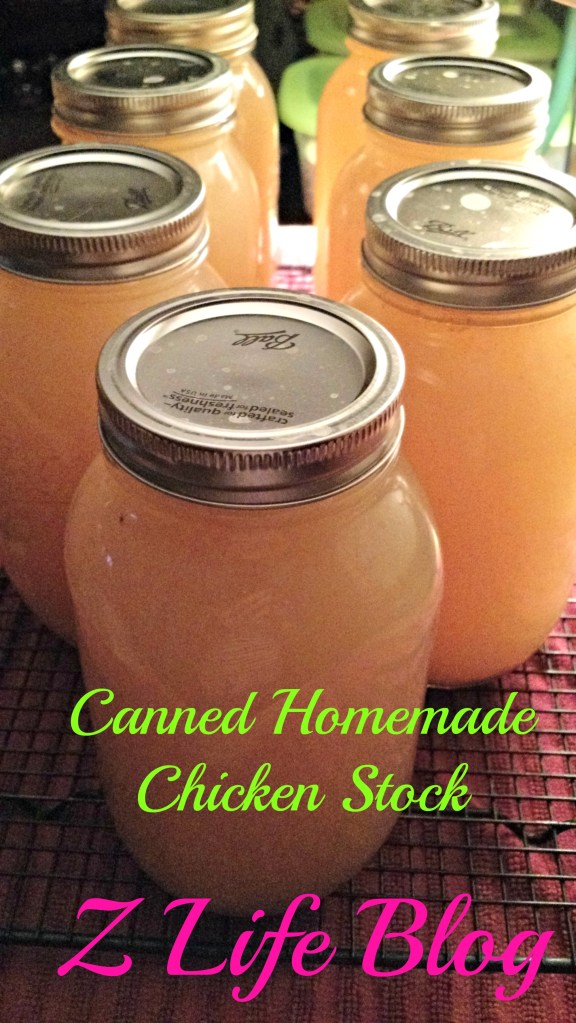
I mean, just look at that beautiful golden rich stock.  Mmmmmmm, I can’t wait for some mashed potatoes and gravy!
chicken-stock-4

Canning is not difficult and it’s not dangerous if you follow the basic safety practices.  Yes it takes time and it takes work, but it’s something that I find pleasure in doing.

Even if you don’t have a pressure caner, you can very easily make this stock and freeze it in individual containers and it would still be just as lovely.

And why not get extra goodness out of that roasted chicken by using the bones for stock.  That’s a great way to stretch a dollar.

Till next time,

Lori

Peeling A Fresh Egg

Have you ever tried to peel a fresh boiled egg?

I mean a egg that came straight from the chicken into your house, bypassing the grocery store where they may be a month or more old.

Well let me tell you that peeling a fresh egg can be quite challenging because the shell and membrane does not want to separate from the egg.

Quite often they tear apart or big chunks peel off with the shell and it is very frustrating.

Usually this is how they look.

Not a pretty sight, especially for your deviled eggs that you want to look beautiful and delicious.

Well let me save you from the frustration and tell you how to peel a farm fresh egg perfectly.

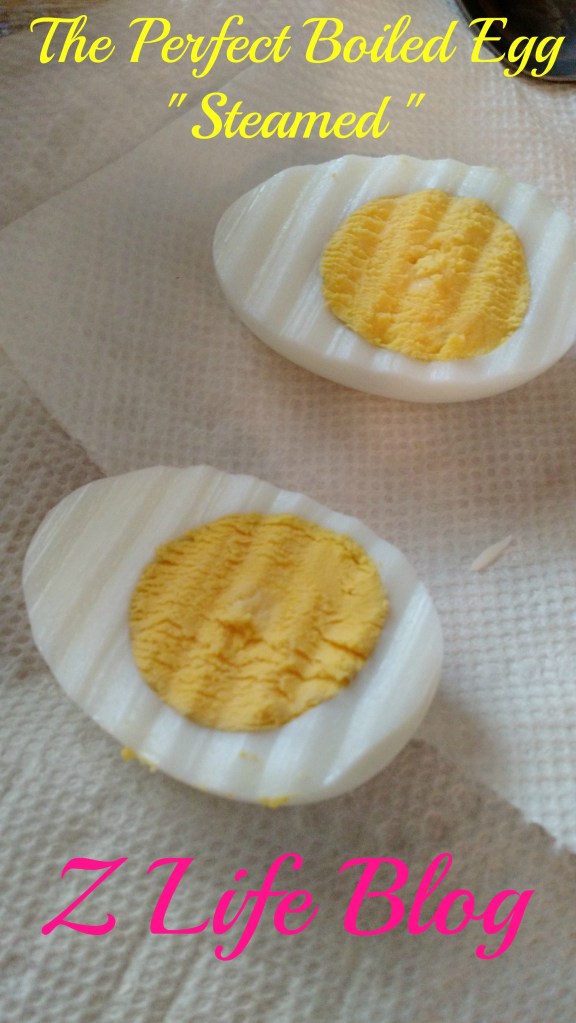
Instead of boiling your eggs in water, you need to steam them in a steamer for 20 minutes.

egg-1

That’s it!  That’s the secret to peeling a fresh egg.

I imagine that any type of steamer would work, but I use a stove top steamer.

Steam your eggs then rinse them in cold water and peel away just as you normally would and the shell will come right off the egg.

You’re welcome 🙂

Till next time,

Lori

Waste Not Want Not

Waste not want not was a very important way of life back in the day.  It was imperative to make the most out of every bit that you had.

I never remember my grandmother hauling garbage cans to the road, because there was no waste in her house.  Now most houses have one or two garbage cans out front on pick up day.

Last week I was telling a friend about all the grapes hanging on the vines and how I really hated to see them go to waste.

She said, well…. “waste not want not”   So, I got busy canning more grape jelly.

I will admit that it doesn’t come naturally for me to think “what else can I do with this”.  I sometimes struggle when a situation calls for ideas outside the box, or an improvisation.  This is because I like a plan and I am not always the most patient person.  😉

Sometimes I get so eager to get so much done that I forget to stop and enjoy the process or think outside the box of how can I make this even better.

So, when my friend said “waste not want not” it stuck with me.

Take a look at my latest waste not want not project.

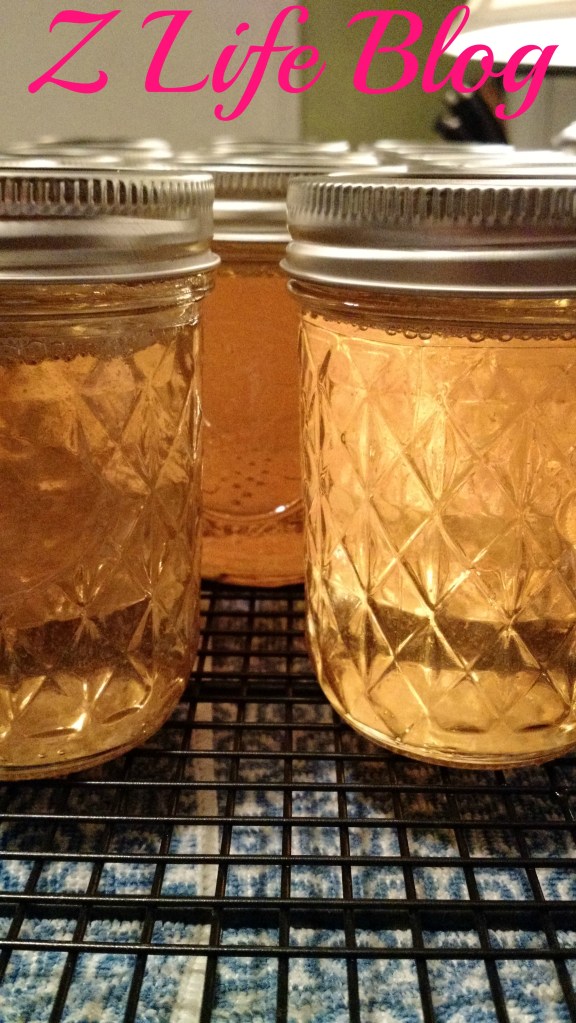
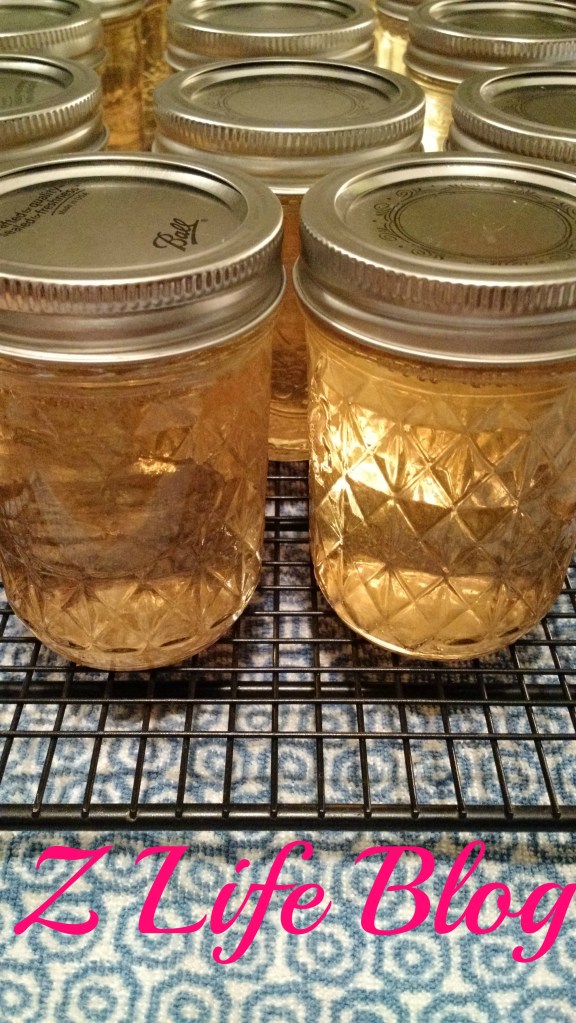
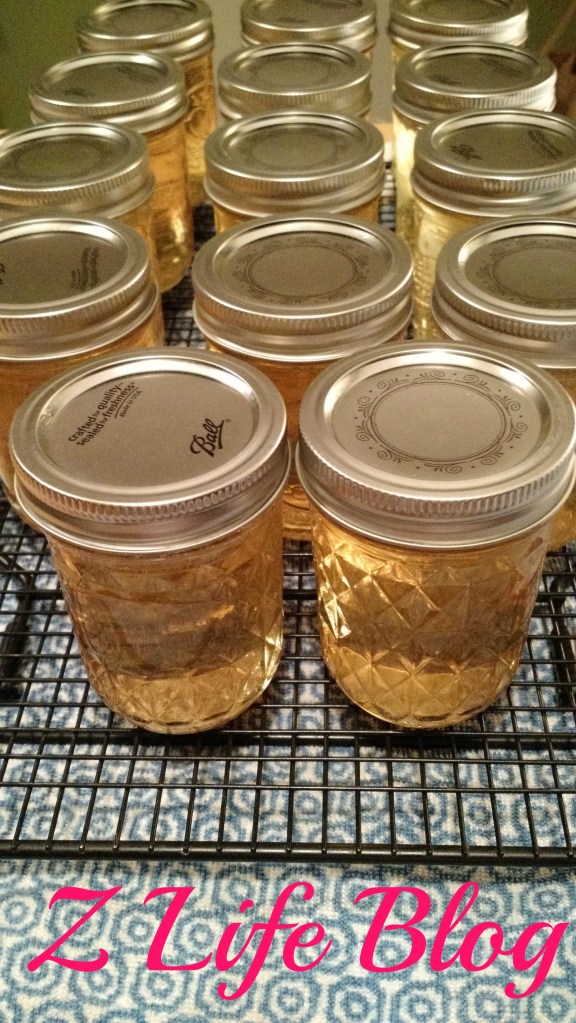
cc jelly 7

cc jelly 5

Take a guess at what it is.

Go ahead, I’ll wait 🙂

cc jelly 6

It’s corn cob jelly Y’all!

Now, I know how crazy that sounds but hey, why not?

Remember I told you about me canning all that corn this past weekend?

I saved the cobs, cooked them overnight in the crock pot to get a beautiful golden corn broth.

Look at that color in those jars.  That lovely golden yumminess!!!!

Oh come on, I know you’ve sucked on a corn cob after eating it to get the sweet juice out of it.  Everybody has.  I know you know what I’m talking about….

Anyway, once you’ve got your corn stock made all you do is bring it to a boil then add pectin and sugar and you have a golden jelly that is a very strong resemblance to the taste of honey.

Once I finished this batch I was so excited that I immediately started jotting down ideas on what type of herbs I could use in it.  For example maybe a rosemary thyme jelly or maybe a lemon or orange citrus hint to it.  I think that would be lovely too.

This corn cob stock would also make a great starter for vegetable stocks or chowders and soups.  Endless possibilities here Y’all.

I think waste not want not worked out pretty good here.

Now, I need to go make some biscuits for this jelly.  YUM!

Corn Cob Jelly Recipe

  • 3 cups of corn cob stock
  • 1 box of fruit pectin
  • 4 cups of sugar

Pour corn stock into a heavy bottom pot and add fruit pectin, stirring frequently on medium heat, bring to a boil.  Continue to stir the mixture and add sugar, return to a boil on medium heat, boil for 1 minute.  Ladle the VERY HOT mixture into jars and water bath for 5 minutes.

That’s it!  How easy is that?

This jelly is a great starter recipe for a beginner canner, or for kids too.

What a sweet way to start your canning hobby.

Till next time,

Lori


Homemade Yogurt

I started making my own homemade yogurt about a year ago when I ran across a recipe on the Frugal Girl website.

I still use this same process because it’s easy and now that I’ve done it so many times I’m able to whip it up pretty fast.

I like making yogurt mainly because it taste so much better and it cost a lot less than store bought.

It’s easy as could be, all you do is

  • heat up milk
  • cool it down
  • add a cup of prepared yogurt
  • pour it into jars
  • let the jars sit in a cooler with warm water for several hours.

I can get local raw milk so that’s what I make my yogurt with, but you can use commercial whole milk too.

The yogurt keeps for a month in the fridge so I just use a whole gallon of milk which turns out 5 pints of thick greek yogurt and 2 quarts of whey for me.
Yep, whey.  You know that protein whey that everyone wants in their diets now and most people have to buy the powdered stuff at the store.  Well, make your own yogurt and you’ll have plenty of it.  (more on that later)
The ingredients you’ll need is:
  • 1 gallon full fat milk
  • 1 cup of non flavored yogurt (your starter yogurt)
The equipment you’ll need is:
  • A heavy bottom stock pot (not cast iron)
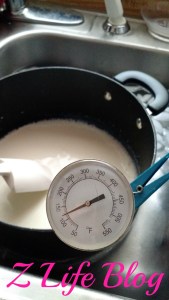
  • A thermometer
  • A Whisk
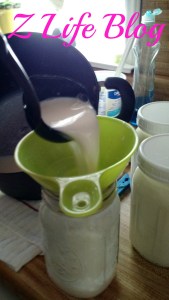
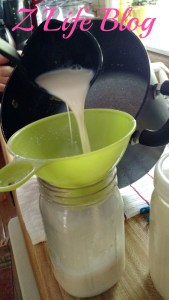
  • Canning funnel
  • Measuring cup or ladle
  • Quart size mason jars (preferably wide mouth)
  • A cooler

This is what I do:

  • Pour your gallon of milk into a heavy bottomed stock pot
  • Gradually bring the temperature of the milk up to 190 – 195 degrees while gently stirring occasionally (do not scrape the bottom of the pot as it may scald a bit and you don’t want that in your yogurt)
  • Fill a sink with ice cold water while milk is reaching temperature
  • Gently lower the pot of milk into the ice water to cool the temperature down to 120 degrees
  • Remove the pot from the sink of water on to a towel on the counter
  • Thoroughly whisk in your starter yogurt
  • Ladle the mixture into your jars and put the lids on tight
  • Put the jars in a cooler and pour 2 quarts of warm water into the cooler
  • Keep water in cooler at 120 degrees for 4 hours
  • Remove yogurt from cooler and refrigerate

yogurt 15                  yogurt 16             yogurt 19

At this point you have yogurt that is ready to eat.

However if you want a thicker yogurt like a greek yogurt (especially if using raw milk, which tends to make a thinner consistency)  then continue on doing this:

  • Let yogurt refrigerate overnight in the jars
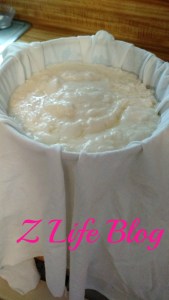
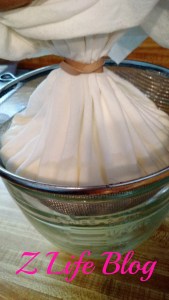
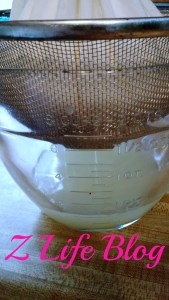
  • Strain all but 1.5 cups yogurt through a fine cloth to release the whey (I have to do this in batches and it usually takes a few hours)

yogurt 12               yogurt 13              yogurt 14

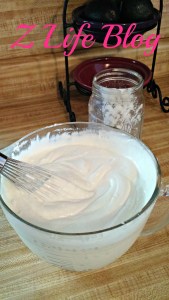
  • Whisk the 1.5 cup of thinner yogurt into the thicker yogurt to end up with a perfect creamy textured yogurt.
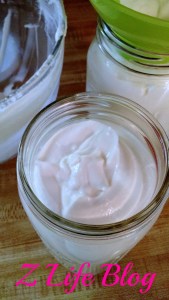
  • Spoon yogurt into jars, put lids on and refrigerate.
                yogurt 20              Yogurt 2
Remember to set aside 1 cup of your yogurt as the starter for your next batch.
I’m afraid that my post has made it sound like making yogurt is a long difficult process, but really it’s not. 
Keep in mind that most of the process is giving it time to set up and time to strain, but that’s not hands on time.
It really is easy and so worth it. 
I hope you’ll give it a try.
We use yogurt in place of sour cream because not only does it taste great it’s better for us too.
Once you taste your homemade yogurt you’ll never go back to store bought yogurt again.
Till next time,
Lori